Why does Little Valley, the St. George neighborhood that spent years marketed as the affordable answer for growing families, now sell at a premium over its own zip code? If you type "Little Valley homes St George" into a search bar tonight, several results will still tell you prices start in the low $300,000s, with a few claiming you can get in at $250,000. Those pages are not lying about the past. They are just years behind the present.
That gap matters more than it sounds. A buyer who anchors a budget to outdated copy walks into showings expecting starter-home pricing and finds custom-lot family homes instead. Understanding why that gap opened, and what it reveals about two other St. George communities, tells you more about this market than the citywide median ever will.
The Citywide Median Is a Blend, Not a Neighborhood
As of August 2026, the citywide median sale price in St. George sits around $549,450, with homes trading at roughly $260 per square foot. That number gets repeated constantly because it is easy to find and easy to quote. It is also close to useless if you are trying to figure out what your own budget will actually buy, because it is an average of three very different products: an established family neighborhood with newer housing stock and large lots, an age-restricted resort community with a built-in discount, and a brand-new master-planned development charging a premium for smaller land.
Look at any one of those three in isolation and the citywide median stops explaining anything.
Little Valley Isn't the Bargain Neighborhood Anymore
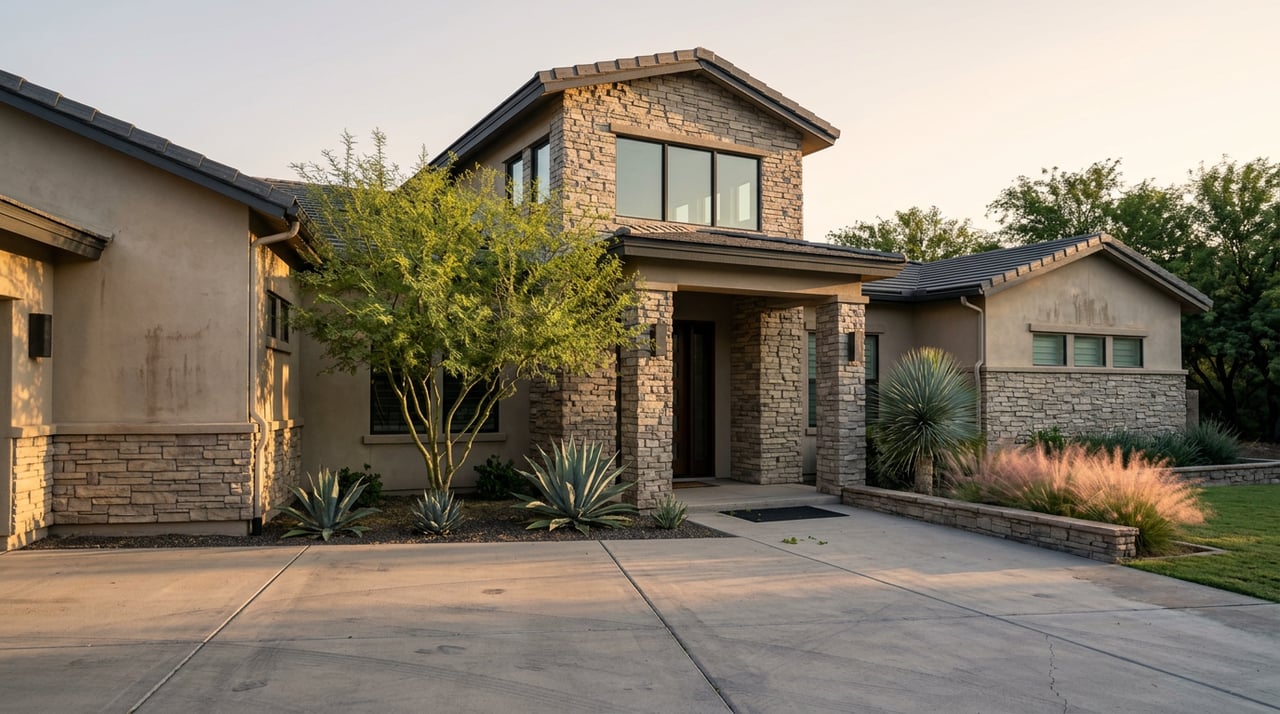
Little Valley started as farmland and horse property on the southeast edge of St. George. Over the 2010s and into the 2020s, builders including S&S Homes, Salisbury Homes, and Ence Homes filled in subdivisions like Meadow Valley Estates, the Knolls at Little Valley, and Rancho Verde Estates, and the area's reputation as an affordable entry point stuck around long after the pricing did not.
As of July 2026, listing medians in Little Valley ran roughly $760,000 to $1,000,000 depending on which subdivision boundary you use, while the broader 84790 zip code carried a median sale price of $574,900 in the same month. Little Valley is not tracking the zip code. It is outpricing it.
Three things explain the flip. The housing stock is newer, with most homes built between 2010 and 2019 and a growing share from 2020 or later, which means fewer of the deferred-maintenance issues that drag down older comparable sales elsewhere in the city. The lots are larger, averaging around 12,600 square feet with a median living area near 2,876 square feet, giving buyers meaningfully more house and yard than the citywide average. And the recreation infrastructure has scaled with the population: the Little Valley Pickleball Complex expanded to 33 courts in 2024, making it the largest public pickleball facility in the state, and it sits alongside soccer fields, ball diamonds, and a well-regarded elementary and intermediate school pairing that feeds into Desert Hills High School.
None of that is a secret to buyers who are already shopping there. It is a secret to anyone still budgeting off a five-year-old blog post.
SunRiver Costs Less Because of Who Can Buy There
SunRiver sits at the other end of the spread. As of mid-2026, the median sale price in this age-55-and-over community runs approximately $476,000, well under the citywide median even though SunRiver offers an 18-hole golf course, a resort-style clubhouse, and more than 60 resident clubs and activity groups that many non-restricted communities cannot match.
The discount is not about quality. It is about the buyer pool. An age restriction shrinks demand to a specific demographic by design, and a smaller buyer pool caps upward price pressure regardless of what is inside the clubhouse. For a downsizing homeowner who wants the lifestyle package without paying a premium tied to school-district demand or family-neighborhood competition, that restriction is a feature. For an investor hoping to flip a SunRiver property into the general market, it is a ceiling that will not move no matter how nice the finishes are.
Desert Color Charges More Per Square Foot for Less Land
Desert Color is the newest of the three and prices like it. As of early August 2026, active listings across the master-planned community carried a median list price of $554,495 at an average of $351 per square foot, well above the citywide benchmark of roughly $260. Inside Desert Color Resort, one of the community's most established sections, lots run small by St. George standards, averaging around 4,138 square feet, or about a tenth of an acre, with a typical home holding closer to 2,090 square feet of living space and a monthly HOA fee near $187 that funds the lagoon, trail network, and pickleball courts the development markets so heavily.
That per-square-foot premium is the cost of buying new construction inside a resort-branded master plan rather than an established neighborhood. It is also worth knowing that Desert Color Resort's monthly median sale price swung from $520,000 in June 2025 to $945,000 in December 2025, reflecting a mix of attached and detached product types moving through a relatively thin monthly sales count. A single month's headline number there tells you less than it would in a larger, more established market, which is exactly why comps inside Desert Color get pulled from within the development rather than from across town.
One more mechanic is worth knowing if you are pricing new construction anywhere in Washington County. The Washington County Water Conservancy District charges a one-time impact fee of $17,266 for a standard 3/4-inch or 5/8-inch water connection, but only $11,413 if the connection meets the district's Ultra Water Efficiency Standards. That roughly $5,800 difference is a real incentive for builders to favor the compact, xeriscaped lots you see throughout Desert Color and similar new-construction communities, and it is part of why smaller yards have become the default rather than an afterthought.
Comparing the Three
| Little Valley | SunRiver | Desert Color | |
|---|---|---|---|
| Recent median price | $760K–$1M (July 2026 listings) | ~$476,000 (mid-2026 sales) | $554,495 (Aug 2026 listings) |
| Typical lot size | ~12,600 sq ft | Established community lots | ~4,138 sq ft (Desert Color Resort) |
| Typical living area | ~2,876 sq ft | Varies by section | ~2,090 sq ft (Desert Color Resort) |
| HOA | $10–$35/month, some none | Included in community fees | ~$187/month (Desert Color Resort) |
| What drives the price | Newer stock, large lots, schools, recreation | Age-55+ restriction limits buyer pool | New construction, resort amenities, small lots |
What This Means If You're Comparing Neighborhoods
The citywide median is a fine number for tracking whether the overall market moved up or down this quarter. It is a poor number to budget against, because it averages together a family neighborhood that got more expensive as it got newer, a retirement community that got a built-in discount from its own eligibility rules, and a resort development charging a land-scarcity premium on brand-new construction.
If you are comparing neighborhoods rather than shopping the citywide average, the better question is not "what's the median" but "what am I actually paying for." In Little Valley, you are paying for land, newer construction, and a school and recreation package that has matured faster than its online reputation. In SunRiver, you are paying less because the buyer pool is smaller by design, not because the product is weaker. In Desert Color, you are paying more per square foot for less land in exchange for brand-new construction and a resort amenity package still being built out.
Any of those can be the right answer depending on what you are optimizing for. None of them are well served by a single citywide number, and none of them are well served by pricing pages that have not been updated since the neighborhood looked different than it does today.
A Few Questions Worth Asking Before You Compare Numbers
Does the citywide median mean anything at all? It is useful for direction, showing whether St. George prices are generally rising or cooling quarter over quarter. It is not useful for budgeting against a specific neighborhood, because the underlying products are too different to average meaningfully.
How do I find out what my own target neighborhood is actually worth right now, not two years ago? Address-level comparisons pulled from inside the specific subdivision, not the city or even the zip code, are the only reliable way to price a home in a market where neighborhoods like Little Valley have moved this far from their own averages this quickly.
If you are trying to figure out where your own numbers land in a market this segmented, an accurate, current comparison beats a generic median every time. MarketPro Real Estate pulls neighborhood-specific data for buyers and sellers across Greater St. George so you know exactly what you are working with before you make an offer or set a list price. Get A Higher Price for Your Home!